
The Orbit of Capital: J.P. Morgan Maps the Third Age of the Space Economy

ASIM, Jun 26
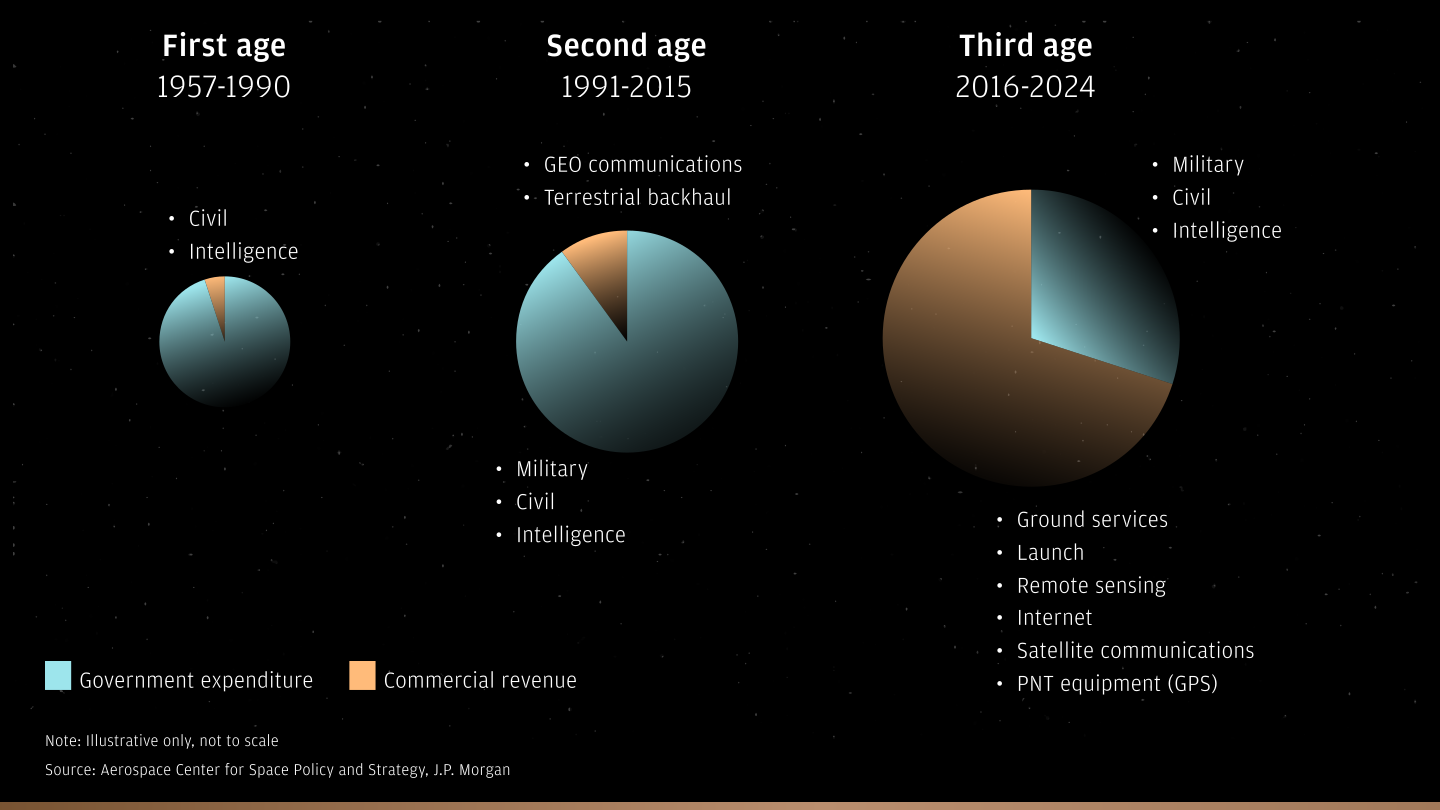
The space economy is rapidly transitioning from a venture capital-heavy infrastructure build-out phase into a mature, highly investable era driven by practical, commercial, and national security applications. According to the latest J.P. Morgan Global Research analysis, the initial stage—which focused heavily on satellite manufacturing and pioneering launch services—is widening into an operational “use-case” phase. This shift allows public market participants to invest in space capabilities across a diverse range of long-standing terrestrial industries, cementing space technology as a major secular engine for global growth.
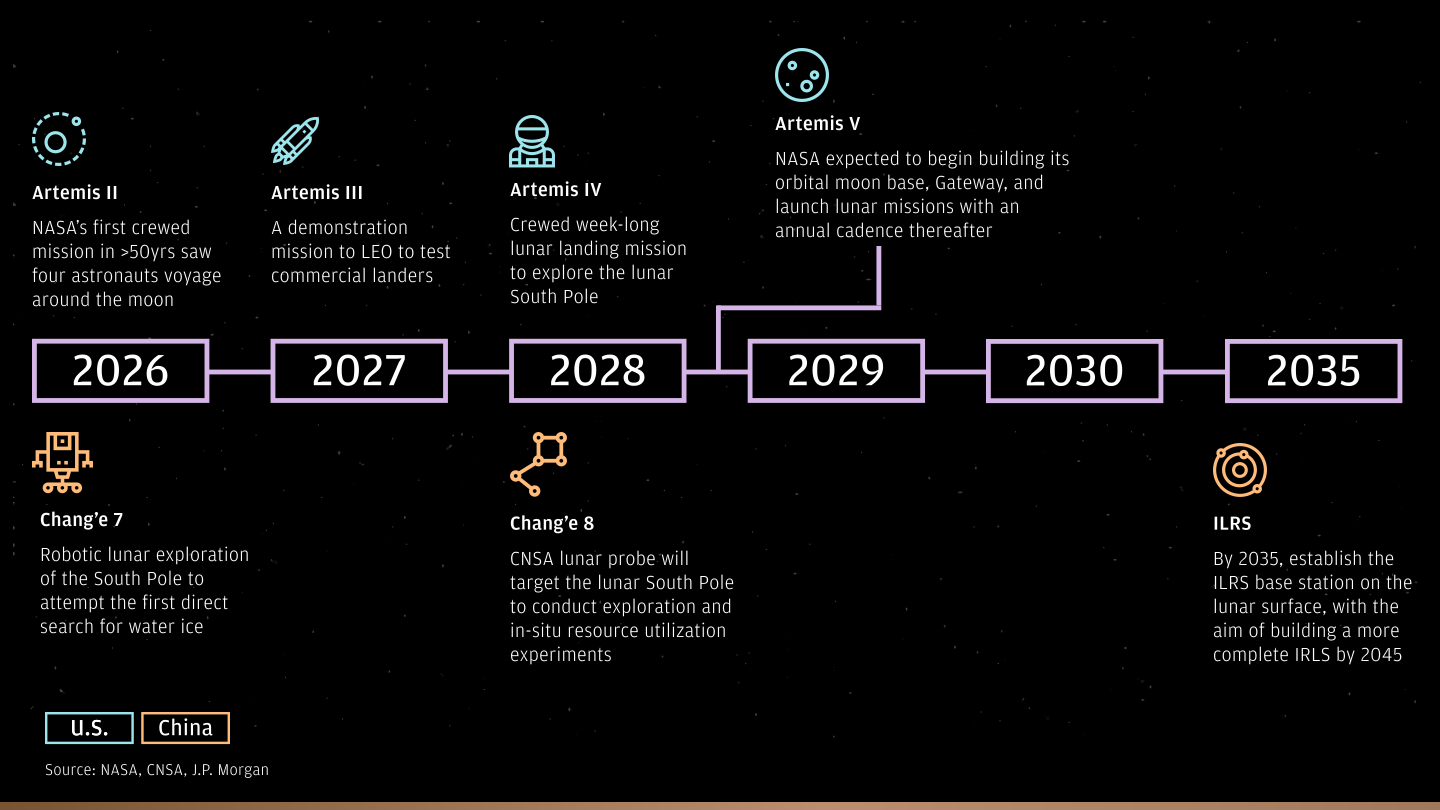
Geopolitical imperatives and public funding structures are driving this orbital realignment, expanding the sector far beyond a traditional two-horse race. While the United States continues to lead with an estimated $130 billion space budget, its relative global share has steadily declined as alternative nations rapidly ramp up sovereign capabilities. Notably, China’s slice of global space expenditures surged from roughly 2% in 2000 to 15%, heavily driven by lunar exploration frameworks aimed at building permanent surface bases to act as staging infrastructure for deep-space transit. Simultaneously, countries like India are expanding market share through highly localized, modular, and low-cost launch platforms designed specifically for the rapidly multiplying small-satellite landscape.
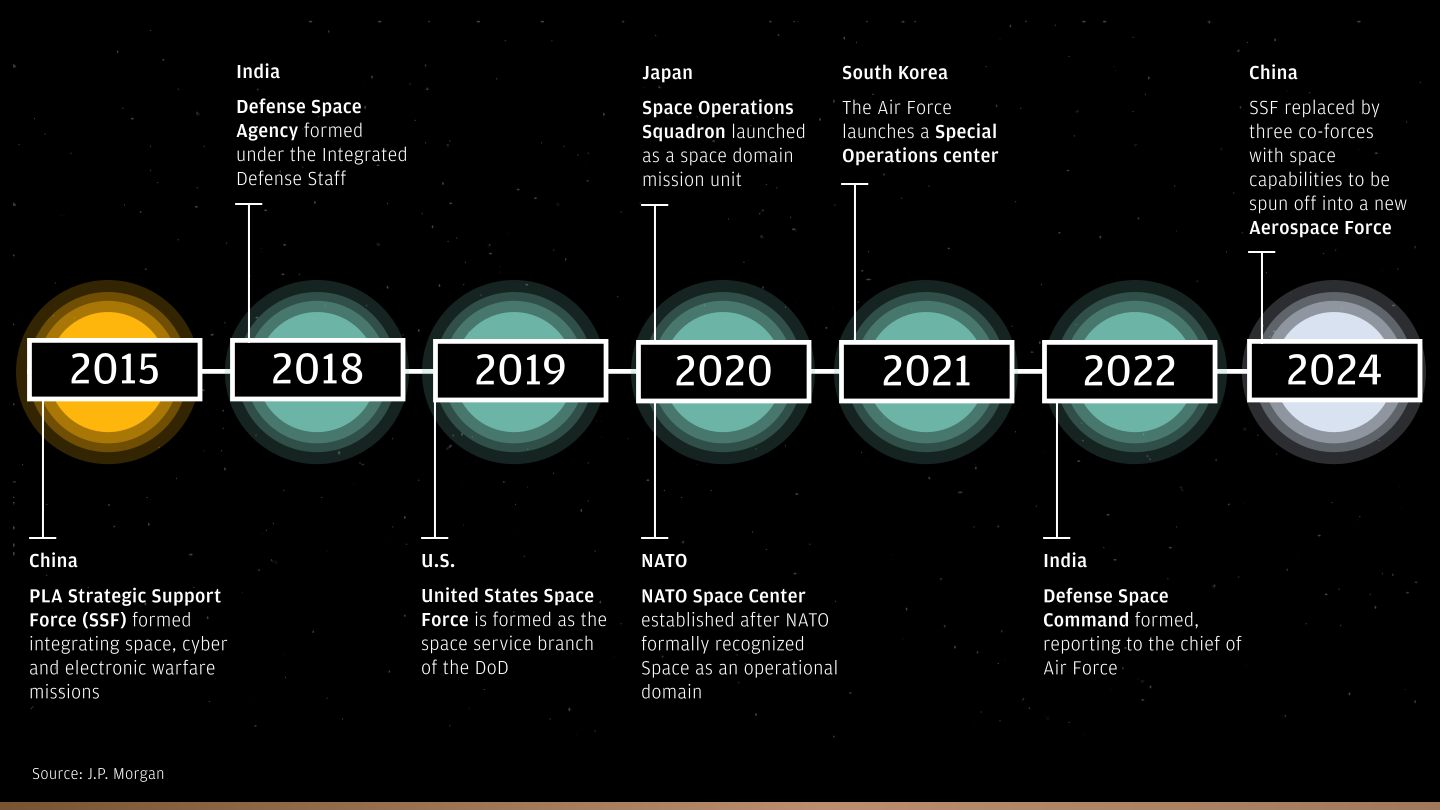
Furthermore, defense requirements and next-generation infrastructure initiatives are bringing the third age of the space economy into sharp focus. Driven by a complex international security landscape, the space defense market alone is projected to reach $250 billion by 2035 as sovereign nations prioritize robust orbital protection grids. Beyond immediate military applications, long-term commercial initiatives like Space-Based Solar Power (SBSP) are emerging as viable avenues for future clean energy grids. While capital expenditure remains bounded by the reality that launch operations account for approximately 70% of total SBSP deployment costs, continuing declines in per-kilogram launch pricing are steadily shifting these ambitious megaprojects from speculative deep-tech endeavors into real-world corporate assets.
ASIM Editorial Insight: At Air&Spaceshows International Magazine (ASIM), we monitor this strategic transition closely. The shift from speculative hardware to defense-backed sovereign infrastructure changes the rules for B2B procurement and global investment. As we approach #Farnborough2026, the intersection of institutional finance and deep-space capabilities will dominate the high-level boardroom agenda.
SpaceEconomy #Defense #SpaceTech #CorporateFinance #B2B #ASIM #FIA26
Reference / Source: J.P. Morgan Corporate & Investment Bank. The space economy: What is the future of space exploration? J.P. Morgan Global Research Insights.